What Working with Our Fairfield Township Crew in Roseland Looks Like
When the call from Roseland comes in, the goal is fastest-possible source-control plus right-sized equipment dispatch. The dispatcher captures the loss type (water vs fire vs sewage vs storm), the severity (a sink overflow vs a basement filling), and the access (gate codes, building manager, COIs). The crew is moving inside 10 minutes of the call ending — not 30, not 60.
For losses that need immediate intervention (pipe failure, smoke contamination, sewage event, structural envelope breach), the dispatch standard is on-site inside the hour. Roseland sits roughly 4 miles from our Fairfield Township base, so on a normal-traffic day that translates to 12 to 20 minutes door-to-door. Storm season we pre-stage equipment for surge events so individual response times do not slip even when call volume spikes across the corridor.
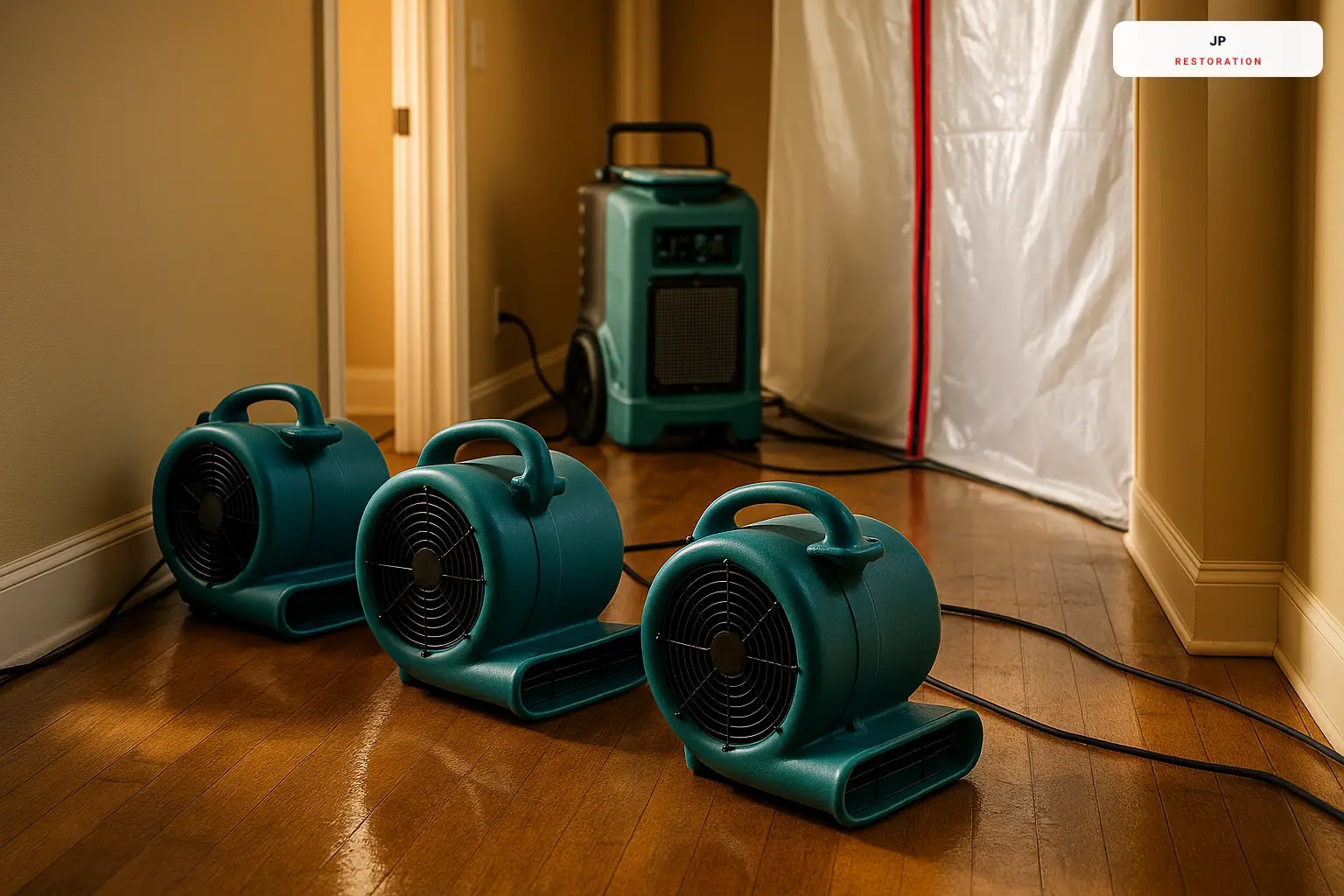
Once the truck is parked, the work follows the same pattern every time: source-control (water off, power isolated, containment up), then comprehensive documentation (photos, moisture readings, written cause-of-loss narrative), then sized equipment deployment. Daily monitoring visits with logged readings until every wet substrate returns to baseline. The reconstruction crew is the same team that did the mitigation — same phone number, same contract, same accountability through final walkthrough.
Insurance scope handling in Roseland
The carrier paperwork on a Roseland loss starts at hour one and continues through final invoice. Daily moisture logs mapped to a building diagram, before/during/after photos of every affected surface, an Xactimate-format scope for both mitigation and reconstruction. Carrier-approved adjusters get a complete file rather than a series of follow-up requests. The cause-of-loss framing is the single most important document because it dictates which policy bucket pays and at what limits.